
The Judicial Branch
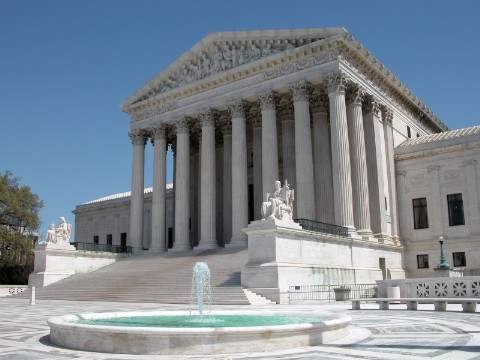
The Judicial Branch decides whether the laws passed by Congress abide by the principles of the U.S. Constitution. If the Supreme Court rules that a law passed by Congress does not agree with the principles of the Constitution, the law is considered "unconstitutional". This is the "check" the Judicial Branch has over Congress and the President.
The highest court is the Supreme Court, shown in the photo above. It is located in Washington, D.C. Judges are appointed by the President, and the Senate has the power to "check" these appointments by having the ability to approve them. The justices make rulings over issues that are presented to the Judicial Branch for review. They are responsible for interpreting and explaining the Constitution.
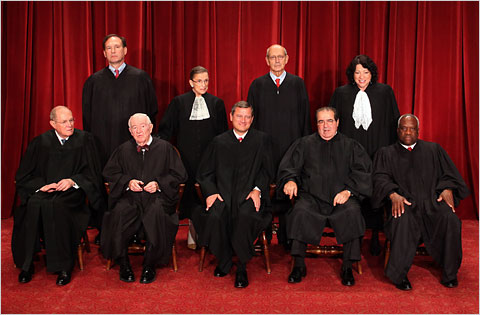
Article III of the Constitution states that the Judicial power is to be vested in the Supreme Court. This court was created under the Judiciary Act of September 24, 1789, and established in 1790. The justices serve no fixed term. They only leave the court if they have died, decided to retire, or have been convicted by the Senate for impeachment. The average length of service of a justice is about 16 years. The court is in session from the first Monday in October until the first Monday in October of the following year. There are about 10,000 petitions filed each year. This is a significant number, and therefore, the court is not able to act upon every request.
*Visit the Official Supreme Court Website for even more information on its function, origin, and names of the justices who are currently serving.
www.supremecourt.gov/about/about.aspx
* For information about the history of the Supreme Court under previous Chief Justices, visit the link below.
www.supremecourthistory.org/history-of-the-court/history-of-the-court-2/
The following link takes you to a 6 minute educational video on how the judicial system works (including Lower Courts, Court of Appeals, and the Supreme Court). On that same link, you can play some fun and interactive games and webquests that challenge your knowledge of the judicial system.
www.icivics.org/subject/judicial-branch